
Considering a non-invasive treatment like botox, PRP, profhilo or microneedling? Book a free consulation at our Richmond Hill clinic today.
[Updated September 7, 2026]
Microneedling for wrinkles, acne scars and pigmentation uses controlled micro-injuries to trigger the skin’s repair response and support collagen remodelling.
Research is strongest for certain types of acne scarring and increasingly supportive for facial rejuvenation. Pigmentation is more complex, and the role of microneedling depends on the type of pigmentation being treated.
Dermatouch offers professional microneedling treatments in Richmond Hill for concerns including texture, acne scars, fine lines and uneven skin tone.
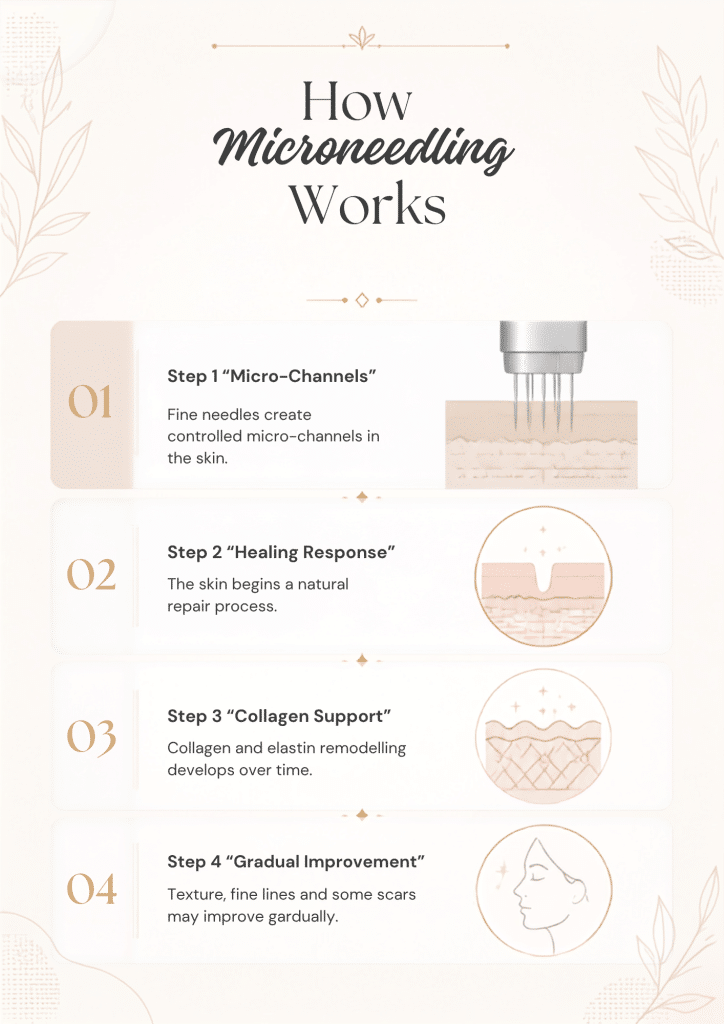
Microneedling uses fine needles to create controlled micro-channels in the skin.
These channels trigger a wound-healing response that involves collagen and elastin production. Over time, this process can support changes in skin texture, firmness and the appearance of some scars and fine lines.
The results develop gradually rather than immediately after treatment.
Acne scars are one of the best-supported uses of microneedling.
The treatment can help remodel collagen beneath certain depressed, or atrophic, acne scars. As the skin heals, some scars may become shallower and the surrounding texture may look smoother.
A 2024 network meta-analysis of randomized trials found microneedling and several combination approaches effective for acne scars, although outcomes varied between treatment methods.
Microneedling tends to suit some depressed scars better than others. Deep or narrow scars may require different or combined treatments.
For more detail, see our guide to PRP and microneedling for acne scars.
Microneedling may help some pigmentation concerns, but the evidence depends heavily on the type of pigmentation.
For conditions such as melasma, research suggests microneedling may be useful as an adjunct, especially when combined with other treatments. A 2025 meta-analysis found benefit when microneedling was used alongside other melasma therapies, but researchers noted that treatment protocols remain variable.
Microneedling should not be described as a universal treatment for dark spots, sun spots or all forms of hyperpigmentation.
Pigmentation also requires caution because inflammation itself can trigger post-inflammatory hyperpigmentation, particularly in darker skin tones. Current reviews emphasize that PIH can be difficult to treat and that outcomes vary widely across procedures.
A provider should first identify the type of pigmentation before recommending treatment.
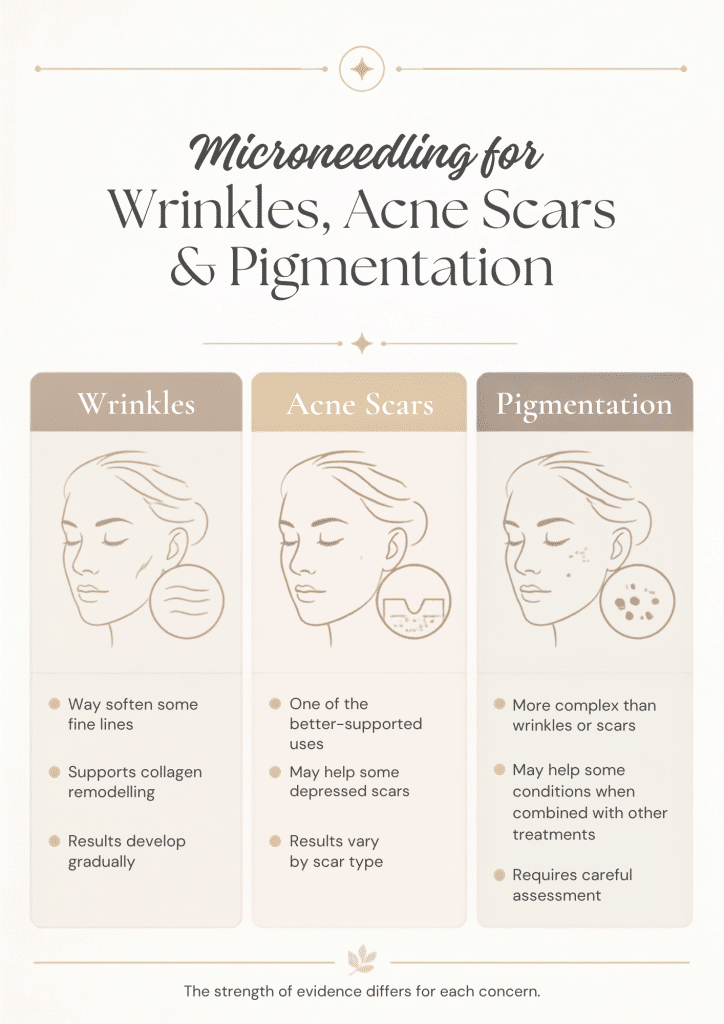
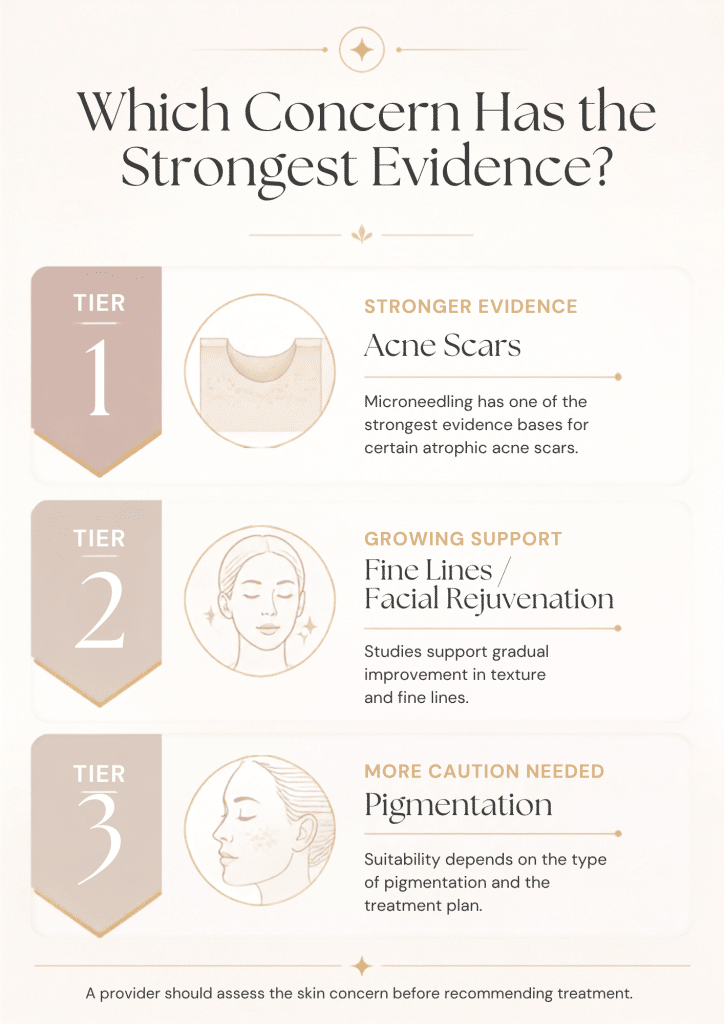
The evidence is not equally strong for all three concerns.
Acne scars have one of the strongest evidence bases for microneedling, especially for certain atrophic scars.
Fine lines and facial rejuvenation also have growing supportive evidence, although studies use different treatment protocols and outcome measures.
Pigmentation requires the most caution. Microneedling may help some conditions, such as melasma when used alongside other therapies, but it should not be treated as a one-size-fits-all pigmentation treatment.
A typical treatment includes:
Treatment depth and technique can vary based on the area and concern being treated.
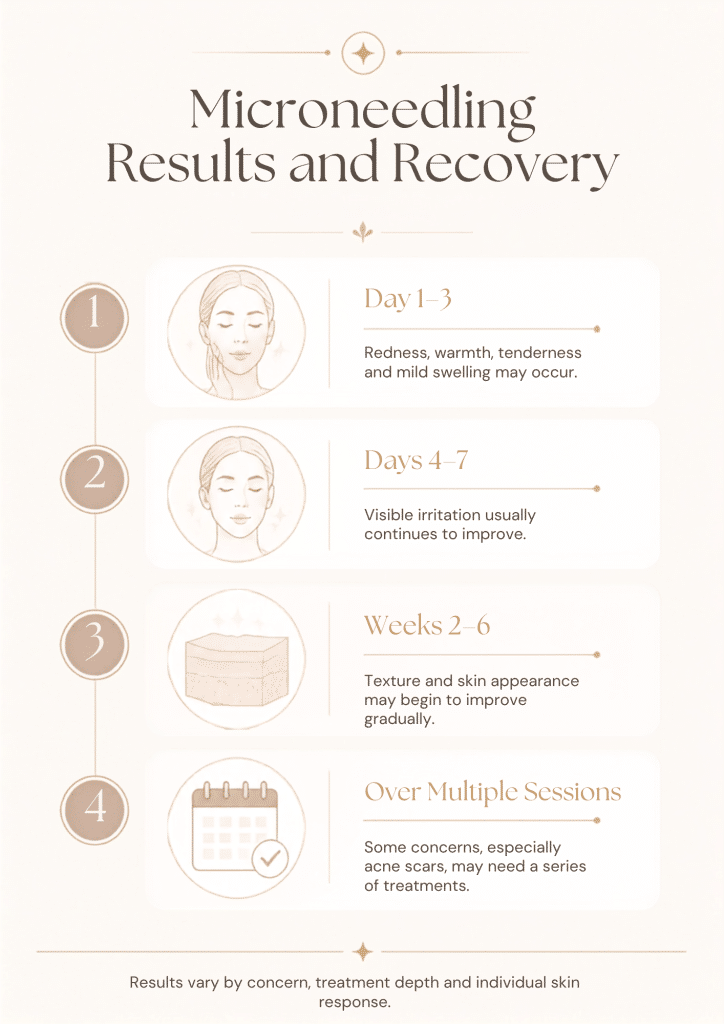
Temporary redness, warmth, tenderness, dryness and mild swelling can occur after microneedling.
These effects often improve over the first several days, although recovery varies according to treatment depth and individual skin response.
For detailed recovery guidance, see our microneedling aftercare guide.
Microneedling results develop gradually.
Early redness settles first, while changes related to collagen remodelling can take several weeks to become more noticeable.
Some people may need a series of treatments, especially for acne scars or more noticeable texture concerns.
The number and timing of sessions should depend on your treatment goal, skin response and provider assessment.
Common temporary effects may include:
Less common complications can include infection, scarring and pigment changes.
Pigment changes deserve particular attention in people who are prone to post-inflammatory hyperpigmentation. Appropriate treatment settings, sun protection and aftercare are important.
Microneedling does not suit everyone.
Your provider may postpone treatment if you have an active skin infection, inflammatory skin condition, active acne in the treatment area or other factors that could affect healing.
A professional assessment is especially important if pigmentation is your main concern, because different pigment conditions require different treatment approaches.
Microneedling may help improve certain wrinkles, acne scars and pigmentation concerns, but the strength of evidence and expected results differ for each condition.
Acne scars have one of the strongest evidence bases. Fine lines may improve gradually through collagen remodelling, while pigmentation requires more careful assessment.
Dermatouch offers microneedling treatments in Richmond Hill with plans based on individual skin concerns and goals.
You can book a consultation with Dermatouch to discuss whether microneedling may be appropriate for your skin and what results you can realistically expect.