
Considering a non-invasive treatment like botox, PRP, profhilo or microneedling? Book a free consulation at our Richmond Hill clinic today.
Regenerative treatments like PRF and PRP have become popular options for clients looking for natural skin rejuvenation and hair restoration. Both treatments are completely customized, use your own blood, and support healthier tissue from within. Many of our clients from Richmond Hill and the Greater Toronto Area are exploring these treatments, but often wonder which one is the better choice.
This guide explains the differences in simple terms so you can feel confident choosing the right option for your goals.
PRP stands for platelet-rich plasma. It is created by drawing a small amount of your blood, placing it in a centrifuge, and spinning it at a controlled speed. This process separates the plasma, which is rich in platelets and growth factors that stimulate healing.
At Dermatouch, PRP is commonly used for:
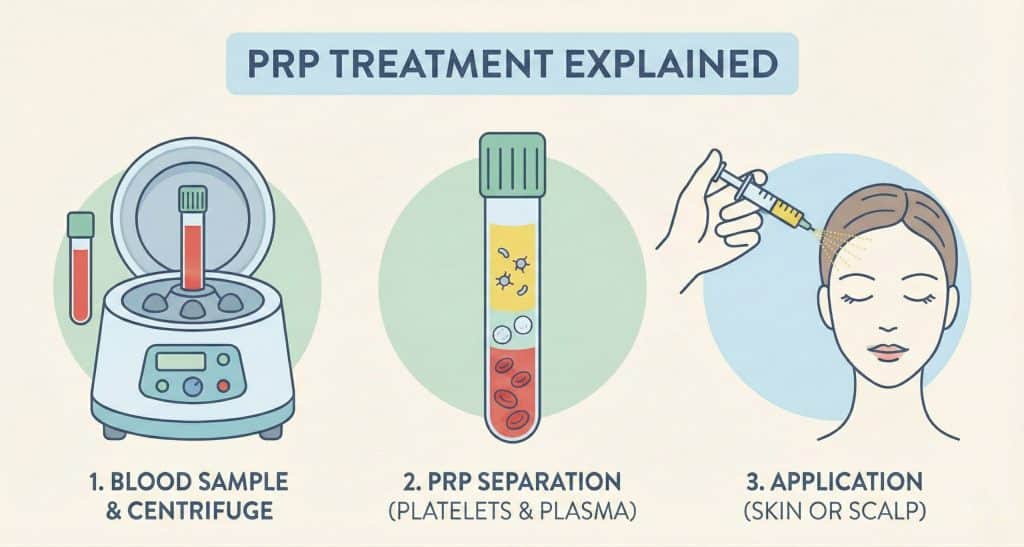
Once applied to the skin or injected into specific areas, PRP delivers growth factors directly to the tissue. These growth factors encourage collagen production, improve circulation, and support healthier, stronger follicles.
PRP is natural, minimally invasive, and has very little downtime. Most clients complete a series of sessions to achieve visible, long-lasting improvement.
PRF stands for platelet-rich fibrin. It is considered the next generation of PRP because it contains an even higher concentration of platelets, white blood cells, stem cells, and fibrin.
The key difference is how it is processed. PRF is spun at a slower speed, keeping more of the natural components of your blood intact. No anticoagulants or additives are used. As a result, PRF naturally forms a soft fibrin matrix that releases growth factors slowly over time.
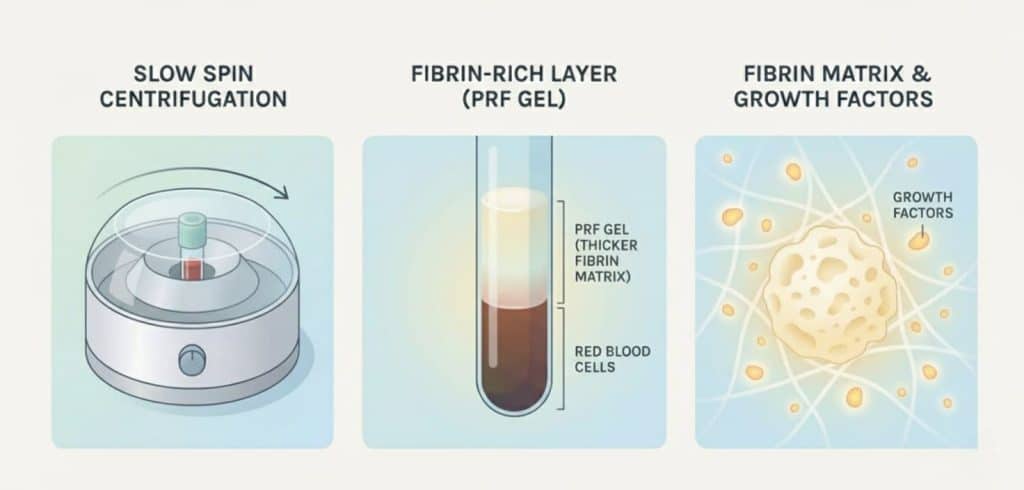
Because PRF is thicker in consistency, it can also be used in delicate areas like the under eyes, where PRP may not provide enough support.
Here is a simple chart to help you understand how these treatments differ.
| Category | PRP | PRF |
|---|---|---|
| Composition | Platelets + plasma | Platelets, fibrin, WBCs, stem cells |
| Release of Growth Factors | Fast release | Slow, sustained release |
| Treatment Longevity | Short-term improvement | Longer-lasting, deeper regeneration |
| Application / Texture | Liquid; great for microneedling & hair restoration | Gel-like; can add soft volume when injected |
| Additives | Often requires anticoagulant | No additives; fully natural |
Both treatments are safe, comfortable, and minimally invasive, with very similar recovery times.
While both PRP and PRF use your body’s natural healing properties, research shows there are measurable differences in how they perform. Studies have found that PRF contains a higher concentration of platelets and regenerative cells. As a result, it releases growth factors more slowly over time. This gradual release is one of the key reasons PRF often provides deeper and longer-lasting rejuvenation.
One clinical study found that PRF delivered significantly greater and more sustained growth factor release compared to PRP during the early healing phase. This supports what many clients experience in practice: PRF can offer stronger regenerative support, especially in areas needing more robust improvement.
There is also growing scientific support for the benefits of PRF for acne scar removal. In another clinical study comparing PRP and fluid PRF, clients treated with PRF showed greater improvement in acne scars, skin texture, and overall skin firmness than those treated with PRP.
Both PRP and PRF can improve skin quality, but they are best suited to different needs.
PRP works beautifully with microneedling to boost collagen and smooth the skin.
PRF’s thicker texture and long-acting growth factors help improve areas where the skin needs deeper support.
Both PRP and PRF can improve hair density, but their strength levels are different.
PRP boosts circulation, increases follicle strength, and can slow shedding. It is ideal for clients experiencing mild to moderate hair thinning.
PRF contains more regenerative cells, which can help improve weakened follicles and support fuller regrowth. Clients with more noticeable thinning often respond extremely well to PRF.
Most clients follow a plan of several sessions spaced a few weeks apart, with visible improvement developing gradually.
Choosing the right treatment depends on your goals, skin quality, age, and the severity of your concerns. Here are a few simple guidelines:
Your consultation at Dermatouch will include a full assessment, treatment plan, and realistic expectations so you feel confident in your decision.
Most men and women are strong candidates for both PRP and PRF. These treatments work for all skin types and are popular among clients who want natural improvements without synthetic fillers or surgery.
You may be a good candidate if you want:
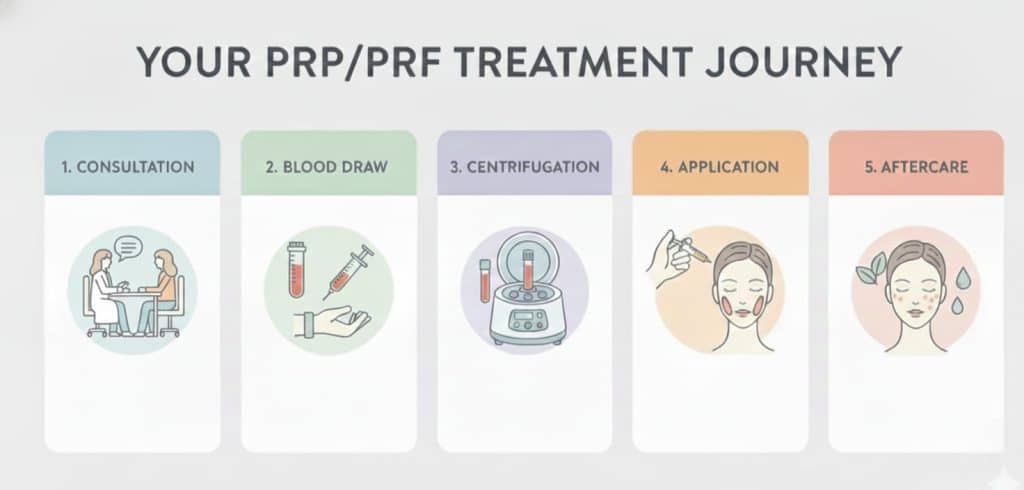
Your visit at Dermatouch is designed to feel professional, comfortable, and stress-free. We treat hundreds of patience across the Greater Toronto area who are seeking safe and reliable PRF/PRP injections.
PRF and PRP are both powerful regenerative treatments that improve skin quality and support healthy hair growth. PRP is excellent for enhancing glow, smoothing texture, and helping with early thinning. PRF is ideal for deeper rejuvenation, restoring delicate areas, and supporting more advanced hair concerns.
If you are unsure which treatment is best for you, the team at Dermatouch in Richmond Hill can guide you through the process and build the right plan for your goals.
Book your free consultation today and discover whether PRP or PRF is right for your goals.