Considering a non-invasive treatment like botox, PRP, profhilo or microneedling? Book a free consulation at our Richmond Hill clinic today.
[Updated August 7, 2026]
Proper microneedling aftercare helps protect your skin while it recovers. After treatment, your skin may temporarily look red or feel warm, tight, dry or sensitive. Mild swelling and flaking can also occur during the first few days.
The most important steps after microneedling are to keep your skincare routine gentle, avoid unnecessary irritation and heat, protect your skin from excessive sun exposure, and follow the aftercare instructions provided by your treatment professional.
Dermatouch offers professional microneedling treatments in Richmond Hill with treatment plans based on individual skin concerns and goals.
Microneedling uses very fine needles to create controlled microscopic channels in the skin. These controlled micro-injuries stimulate the skin’s natural healing response and the production of collagen and elastin.
Immediately after microneedling, the skin may look and feel similar to a mild sunburn. Temporary effects can include:
These effects usually improve over several days, although microneedling recovery varies depending on treatment depth, the area treated and individual skin response.
If you’d like to understand more about the treatment itself, read our guide to the benefits of microneedling.
During the initial recovery period, good microneedling aftercare means keeping your routine simple and avoiding things that could unnecessarily irritate the skin.
Your treatment provider may recommend that you:
Individual aftercare instructions can vary according to the treatment performed, so your provider’s recommendations should take priority over a general timetable.
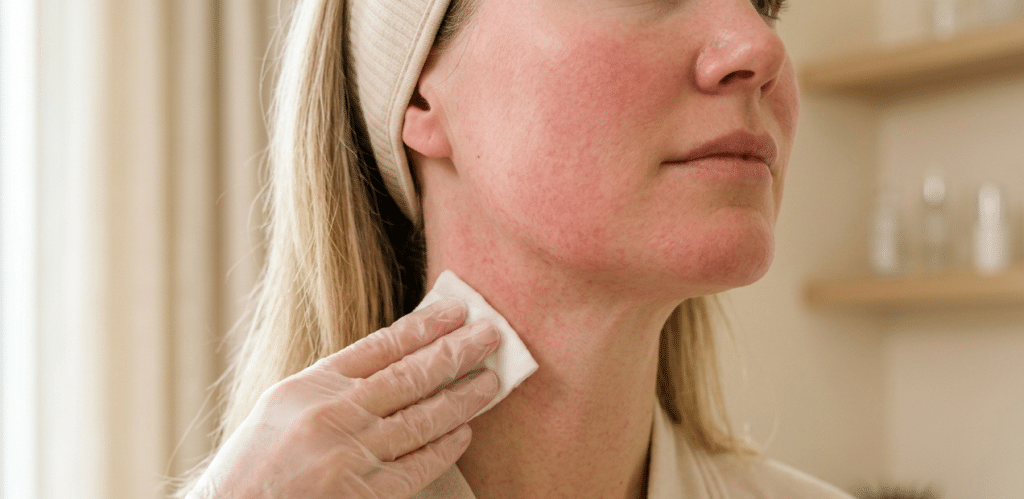
Microneedling recovery varies from person to person, but most temporary redness, sensitivity and dryness improve over the first several days.
Your skin may appear red, warm or slightly swollen after microneedling. Mild tenderness or tightness can also occur.
During this time:
Redness and swelling generally begin to settle.
Your skin may feel:
Continue using gentle skincare and avoid exfoliating acids, retinoids, scrubs and other potentially irritating products.
For many people, the skin is returning closer to its normal appearance by this point.
Mild dryness or flaking may continue. Avoid picking or peeling the skin and allow any flaking to resolve naturally.
Continue protecting your skin from excessive sun exposure and gradually return to your regular skincare routine according to your provider’s instructions and how your skin is responding.
Recovery can be faster or slower depending on treatment depth, the area treated and individual skin response.
Face washing after microneedling should be gentle and should follow the instructions provided by your treatment professional.
Once cleansing is resumed, avoid hot water, exfoliating cleansers, cleansing brushes and aggressive rubbing. A gentle cleanser and lukewarm water are generally preferable while the skin remains sensitive.
Pat your skin dry rather than rubbing it.
There is no single cleansing schedule that applies to every microneedling procedure because treatment depth and technique can vary. Follow the instructions provided after your treatment.
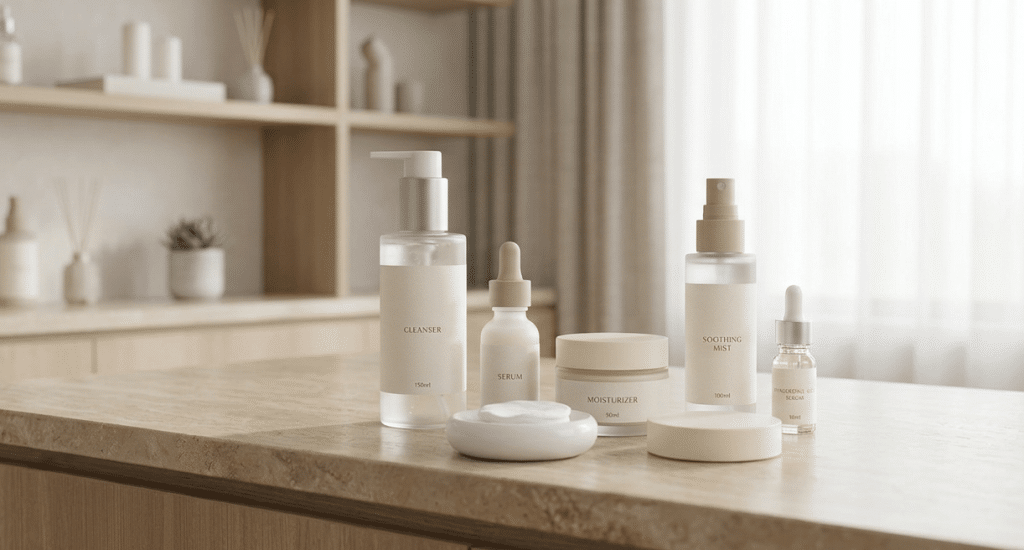
A simple skincare routine is an important part of microneedling aftercare during the first several days. Freshly treated skin can be more sensitive to products that you normally tolerate well.
During the early recovery period, your treatment provider may recommend temporarily avoiding:
Rather than restarting active ingredients according to a universal timetable, wait until your skin has recovered and follow the guidance provided by your treatment professional.
A simple routine is generally preferable during the early stages of microneedling recovery.
It is generally best to avoid makeup during the initial recovery period after microneedling.
Clinical guidance commonly recommends waiting at least until the day after treatment, although a longer break may be appropriate depending on treatment depth and how your skin is recovering.
If your skin remains red, swollen, irritated or particularly sensitive, give it additional time and follow your provider’s instructions before applying makeup again.
Yes. Sun protection is an important part of microneedling aftercare because recently treated skin can be more sensitive.
Avoid unnecessary direct sun exposure during the early recovery period. Follow your treatment provider’s recommendations for sun protection, which may include broad-spectrum sunscreen along with physical protection such as shade or a hat.
Ongoing sun protection is particularly important when addressing concerns such as uneven pigmentation
Strenuous exercise is generally best avoided during the first 24 hours after microneedling.
Heavy exercise can increase heat and sweating while your skin is sensitive. Saunas, steam rooms and other sources of excessive heat should also be avoided during the initial recovery period.
Your provider may recommend waiting longer depending on the treatment performed and how your skin is responding.
Mild dryness, roughness or flaking can occur during microneedling recovery.
Do not pull, scratch or exfoliate peeling skin. Allow it to shed naturally and continue with the gentle skincare recommended by your treatment provider.
More significant symptoms, such as blistering, severe pain or worsening skin changes, are different from ordinary mild flaking and should be discussed with your provider.
Some people may notice temporary bumps or breakouts after microneedling, but a breakout should not automatically be assumed to be a normal part of healing.
Avoid picking at the area or immediately adding strong acne treatments while the skin is still sensitive.
If breakouts are significant, persistent or painful, or occur with worsening redness or other unusual symptoms, contact your treatment provider.
Microneedling is generally not performed directly over certain active skin infections or inflammatory conditions. Suitability should be assessed before treatment.
For more information about treating acne scarring, see how PRP and microneedling may be used for acne scars.
Visible recovery from microneedling commonly takes several days. Some temporary redness, sensitivity, dryness or flaking may continue for approximately a week depending on the procedure and individual skin response.
Surface recovery happens sooner than the collagen-remodelling process associated with microneedling. Changes related to collagen formation develop gradually rather than immediately after the skin’s redness disappears.
Treatment depth, the area treated and your individual response can all affect recovery time.
Microneedling sessions should be spaced far enough apart to allow the skin to recover.
Clinical guidance commonly describes treatment intervals of approximately three to eight weeks. The appropriate schedule depends on factors such as treatment depth, the concern being addressed and your personalized treatment plan.
A series of treatments may be recommended for some skin concerns, while other people may follow a different schedule.
Your treatment professional should determine an appropriate interval after assessing your skin and treatment goals.
Mild redness, tenderness, swelling, dryness and flaking can occur after microneedling.
Contact your treatment provider if symptoms become severe, continue to worsen or seem unusual, particularly if you experience:
If you are unsure whether something you are experiencing is part of normal recovery, contact your provider rather than trying to treat the reaction yourself.
The most important part of microneedling aftercare is keeping your skincare routine gentle and avoiding unnecessary irritation while the skin recovers.
Retinol and other retinoids can irritate freshly treated skin and are generally avoided during the early recovery period. Restart them once your skin has recovered and according to your treatment provider’s instructions.
Avoid physical and chemical exfoliation while your skin is healing. Allow dryness or flaking to resolve naturally instead of scrubbing or peeling the skin.
Redness often improves within the first few days, although it can last longer depending on treatment depth and individual skin response.
Follow your provider’s instructions, but avoid very hot water, steam and excessive heat around the treated area during the early recovery period.
Strenuous exercise is generally avoided during at least the first 24 hours because heat and heavy sweating may irritate recently treated skin. Your provider may recommend waiting longer depending on your treatment.
Good microneedling aftercare is an important part of the treatment process.Keeping your routine gentle, minimizing unnecessary irritation and knowing what to expect during recovery can make caring for your skin after treatment easier.
Results, recovery time and treatment schedules vary from person to person, and microneedling is not appropriate for everyone.
Dermatouch provides professional microneedling treatments in Richmond Hill for concerns including skin texture, fine lines, acne scarring and uneven pigmentation.
If you’re considering microneedling or have questions about treatment and recovery, you can book a consultation with Dermatouch to discuss your skin concerns, treatment options and personalized aftercare recommendations.