
Considering a non-invasive treatment like botox, PRP, profhilo or microneedling? Book a free consulation at our Richmond Hill clinic today.
[ Updated August 11, 2026]
PRP and microneedling for acne scars combine two treatments that support the skin’s repair process. Microneedling creates controlled micro-injuries that stimulate collagen production, while platelet-rich plasma, or PRP, uses concentrated platelets from your own blood.
Research suggests that adding PRP to microneedling may improve acne-scar outcomes for some patients. However, the quality of evidence is still limited. Results also vary by scar type, treatment plan and individual skin response.
Dermatouch offers both professional microneedling treatments in Richmond Hill and PRP treatments based on individual skin concerns and treatment goals.
Microneedling uses fine needles to create controlled microscopic injuries in the skin.
These micro-injuries trigger the skin’s natural repair process and encourage collagen production. Over time, this process may soften the appearance of certain depressed or atrophic acne scars.
However, microneedling works better for some scar types than others. A provider should assess the type and depth of your scars before recommending treatment.
The American Academy of Dermatology includes microneedling among the treatments used for acne scars. It also notes that treatment choice depends on the type of scarring present.
Platelet-rich plasma, or PRP, comes from a small sample of your own blood.
The blood is processed to concentrate platelets within the plasma. These platelets contain growth factors involved in tissue repair and healing.
In aesthetic treatments, providers may apply or inject PRP into targeted areas depending on the procedure and treatment goal.
Microneedling creates controlled channels in the skin and starts a healing response. Providers then use PRP alongside microneedling to deliver concentrated platelets and growth factors to the treated area.
Some studies have found better scar improvement and patient satisfaction when PRP is added to microneedling compared with microneedling alone.
However, newer evidence reviews have found that the overall certainty of the evidence remains low. For this reason, PRP should be viewed as a possible enhancement rather than a guaranteed way to improve microneedling results.
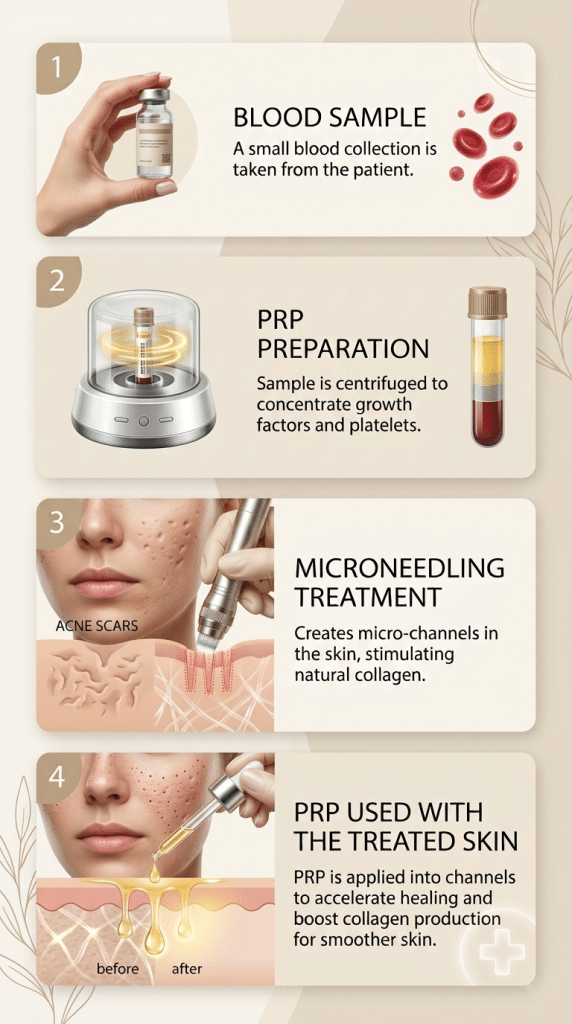
Acne scars can be a persistent problem for many people, and finding the right treatment can be a daunting task. While there are many options available, micro-needling and PRP are one of the most non-invasive options.
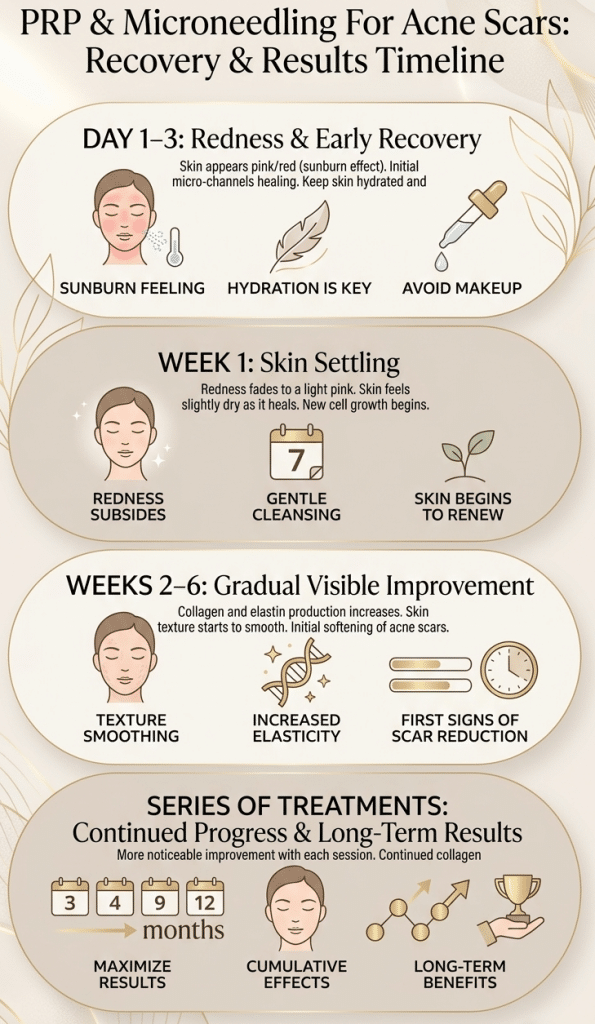
Results from PRP and microneedling for acne scars develop gradually.
The treatment stimulates a repair process rather than instantly removing scar tissue. As collagen remodels, some scars may look softer and skin texture may appear more even.
Your provider may recommend several sessions depending on:
Results vary from person to person.
Visible improvement usually develops over several weeks as the skin heals and collagen remodelling continues.
A single treatment may not provide the desired change for acne scars. For example, deeper or more noticeable scarring may require a series of sessions.
Your provider should assess progress between treatments and adjust the plan when needed.
Microneedling commonly causes temporary redness, tenderness, dryness and mild swelling.
PRP may also cause temporary sensitivity or minor swelling depending on how it is used.
Most visible recovery occurs over several days, but healing time varies by treatment depth and individual skin response.
For detailed recovery guidance, see our microneedling aftercare guide.
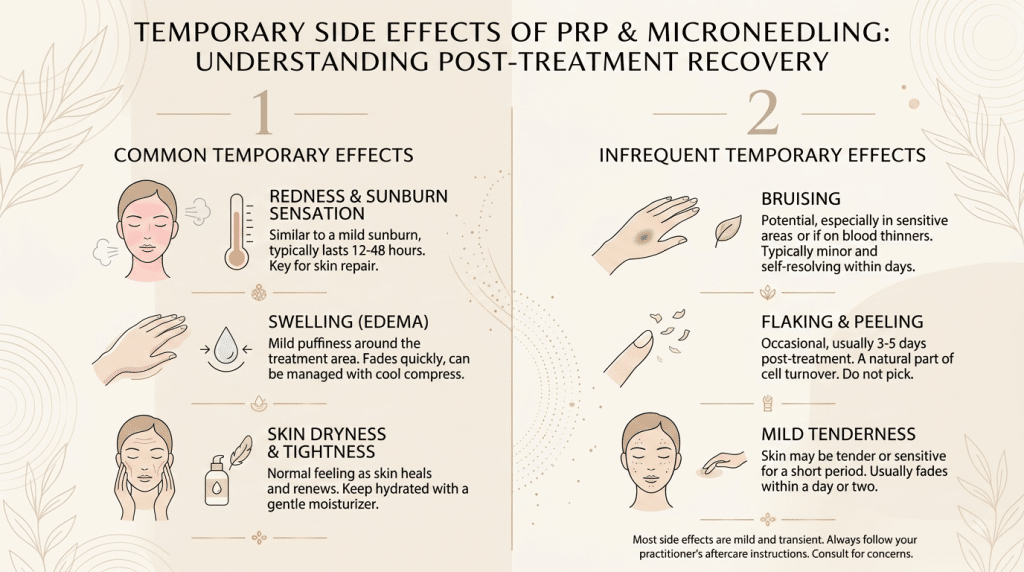
Most patients tolerate both treatments well when a qualified provider performs them, but neither treatment is risk-free.
Potential side effects can include:
In rare cases, patients may develop infection or scarring.
A consultation is important because active acne, certain skin conditions, medical history and scar type may affect treatment suitability.
Research on PRP and microneedling for acne scars suggests that the combination may improve outcomes for some patients. However, the certainty of the evidence remains limited.
The best option depends on your scar type, skin condition, treatment goals and provider assessment.
PRP and microneedling for acne scars may help soften some depressed scars and improve overall skin texture.
Dermatouch offers microneedling and PRP treatments in Richmond Hill with plans based on individual skin concerns and goals.
If you are considering treatment for acne scars, you can book a consultation with Dermatouch to discuss your scar type, expected results and whether microneedling, PRP or a combination approach may be appropriate.